

Frequently asked questions
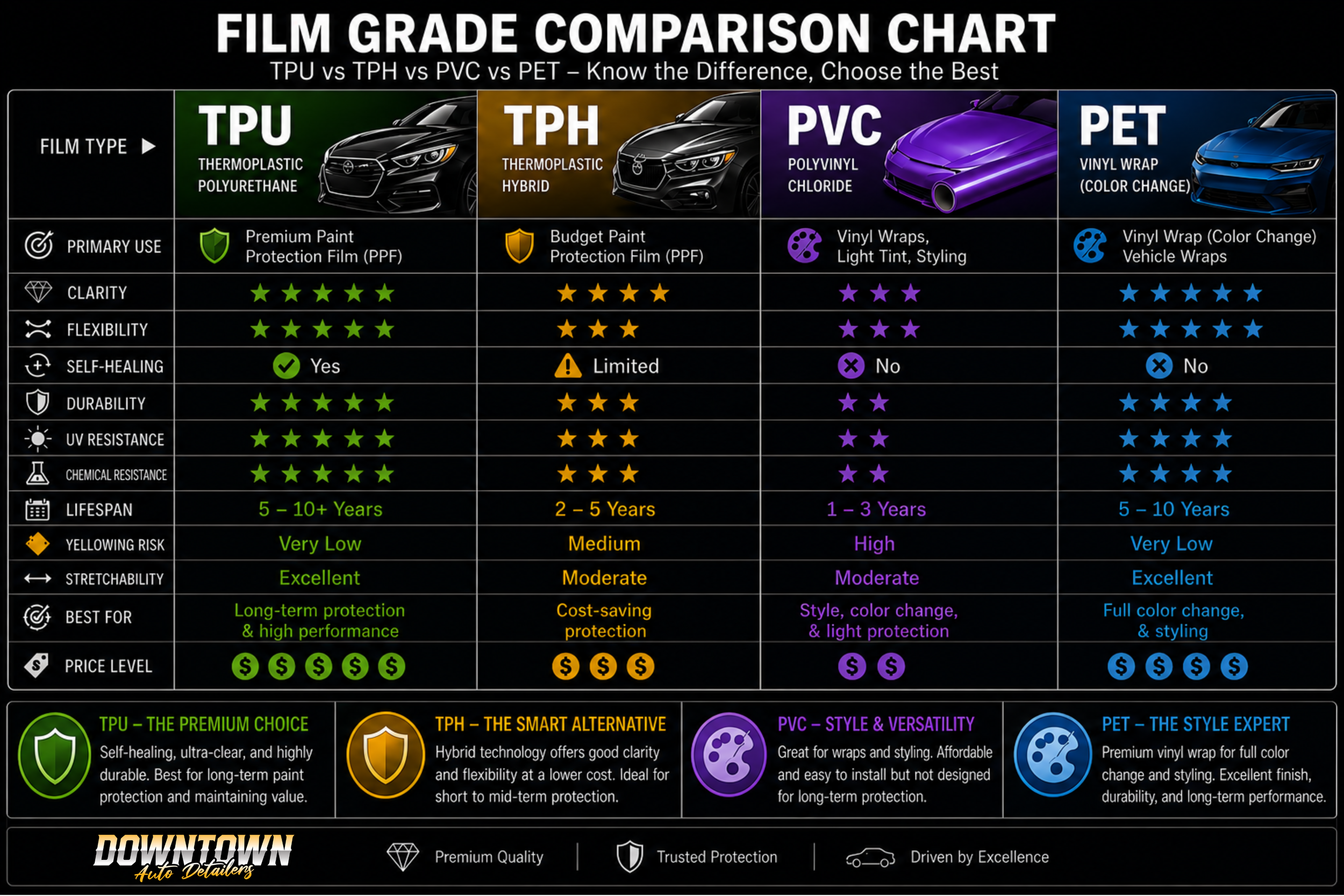
What’s the difference film grade when it comes to PPF & Vinyl Wraps?
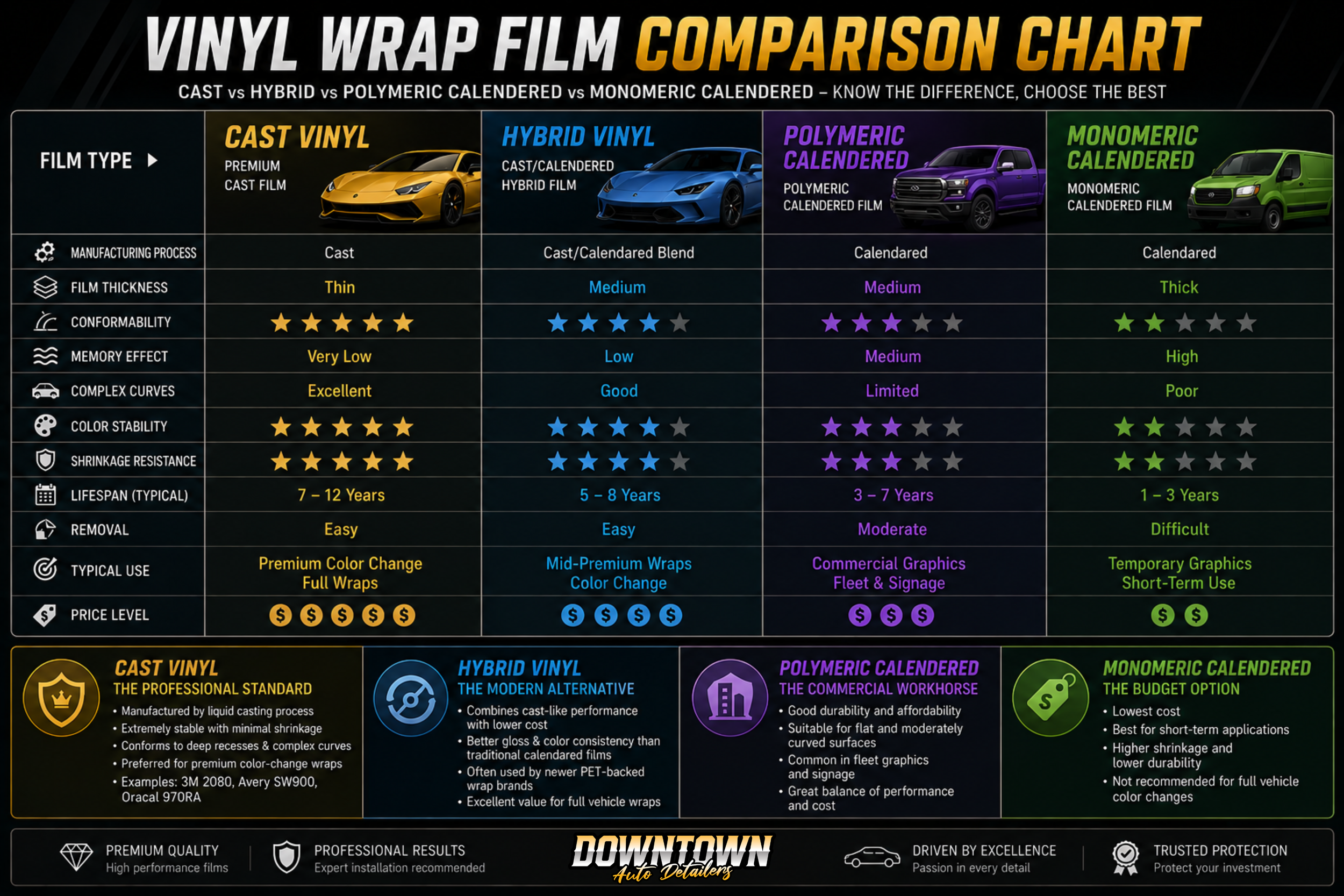
How many type of vinyl wraps film are there?
what film is right for you?
what’s the difference between “car wash” “Car Care” “car Detailing”?
Car Wash is a quick and basic cleaning service focused on removing surface dirt, dust, and grime from a vehicle’s exterior.
Car Care or Auto Care involves a more comprehensive approach to maintaining your vehicle’s appearance and condition. It typically includes an exterior wash, waxing or paint protection, tire and rim cleaning, and basic interior services such as: vacuuming and wiping down surfaces. The goal of “Car Care” is to preserve the vehicle’s finish prevent long-term damage from environmental elements, and maintain a clean, presentable look both inside and out.
Car Detailing or Auto Detailing is a meticulous and comprehensive process designed to restore and protect a vehicle to its original condition or like-new as close as possible. It involves in-depth cleaning, polishing, paint correction, and preservation, of both the interior and exterior. Exterior detailing includes processes such as paint decontamination, polishing to remove swirl marks or light scratches, and application of protective coatings like wax or ceramic glass coating. Interior detailing focuses on thoroughly cleaning and condition all surfaces, including vacuuming, steam cleaning, leather treatment, and stain removal. Detailing not only enhances the vehicle appearance but also helps extend its lifespan, longevity, and resale value by maintaining its overall condition.
How long does an average auto detailing takes?
A full car detail, which includes both interior and exterior services, typically take between 2-6 hours, depending on the vehicle’s size, condition, and level of detail required.
Interior Detailing can take 2 to 6 hours depending on the interior condition
Exterior Detailing can take 2 to 4 hours for a well maintained vehicle
What are the breakdown of Auto detailing?
Exterior Detailing:
Pre-Wash Inspection: (15-30 minutes) - Evaluate the vehicle's condition and plan the best approach for detailing.
Rinse and Pre-Wash: (30-60 minutes) - Loosen dirt, debris and road grime.
Contact Wash: (60-90 minutes) - Remove dirt, debris and road grime.
Wheels and Tires: (30-60 minutes) - Clean and treat wheels, tires, and wheel wells.
Clay Bar Decontamination: (30-60 minutes) - Removes stubborn contaminants from the paint surface that regular washing is unable to eliminate. These particles embed themselves into the clear coat and can leave the surface feeling rough.
Polishing/Paint Correction: (1-2 hours) - Address scratches, swirl marks, and other defects.
Wax or Sealant: (30-60 minutes) - Apply a protective coating to the paint.
Glass and Trim Detailing: (30-60 minutes) - Clean and dress the windows, trim, and mirrors.
Air Pressure Blowout: (30-60 minutes) - To quickly and efficiently eliminate water from hard to reach areas, ensuring no water is left behind to create a water spot.
Interior Detailing:
Vacuuming: (30-90 minutes) - Thoroughly vacuum all areas, including carpets, seats, and the dashboard.
Dashboard and Console: (30-60 minutes) - Clean and dress the dashboard, console, and vents.
Seat Clean and Condition: (30-60 minutes) - Clean and treat fabric or leather seats.
Fabric Seat Extraction: (30-60 minutes) - Agitate and extract loose dirt and debris.
Windows: (30-60 minutes) - Clean interior glass to remove smudges and dust.
Detailing Door Panels: (30-60 minutes) - Clean and treat door panels.
Carpet Extraction: (30-60 minutes) - Agitate and extract loose dirt and debris.
Additional Factors Affecting Timing:
Vehicle Condition: A dirty or heavily soiled vehicle will require more time and effort.
what is etching and what causes it?
In auto detailing, etching refers to permanent or semi-permanent marks or indentations left on the vehicle’s paint surface. These marks are often caused by corrosive substances that chemically react with the clear coat or paint layer. Etching can appear as spots, rings, or dull patches and may be shallow or deep, depending on the severity of the exposure.
Common Causes of Etching:
Bird Droppings - Highly acidic, especially if left under the sun. Can "burn" into the clear coat if not cleaned off quickly.
Bug Splatter - Contains enzymes and acids that degrade paint over time.
Tree Sap - Can harden and chemically bond with the clear coat. Difficult to remove if left too long.
Hard Water Spots - Mineral deposits (like calcium or magnesium) can etch when baked in the sun. These look like cloudy or ring-like stains.
Acid Rain - Pollutants in rainwater can cause pitting and erosion when dried on the surface.
Improper Washing Techniques - Using harsh chemicals or strong degreasers without proper dilution can also cause etching.
How to Prevent Etching?
Wash off contaminants quickly (especially bird droppings or bug splatter).
Apply a good-quality wax, sealant, or ceramic coating for protection.
how many layers are on a vehicle paint?
E-coat (Electroplating): This is a thin layer applied to the metal body of the car before the other layers are applied. It helps to protect against corrosion and provides a good base for the primer.
Primer: The primer layer helps to level out any imperfections in the metal surface and provides a smooth surface for the base coat to adhere to. It also helps to protect against rust and corrosion.
Base Coat: This is the color layer of the paint. It provides the actual color of the car.
Clear Coat: The clear coat is a transparent layer that protects the base coat from UV rays, scratches, and other damage. It also adds a glossy finish to the paint job.
What’s the Difference Between 3M Paint Protection Film (PPF) and Ceramic Coating?
PPF is a clear film that protects against scratches, rock chips, and physical impact, while ceramic coating is a liquid layer that offers chemical protection, hydrophobicity, and shine. Here's a side-by-side comparison:
Key Differences
Material
PPF: Thick polyurethane film
Ceramic Coating: Nano-ceramic liquid
Protection Type
PPF: Physical (impacts, chips, scratches)
Ceramic: Chemical (UV rays, bird droppings, stains)
Gloss & Shine
PPF: Subtle shine (or matte if preferred)
Ceramic: Deep, high-gloss enhancement
Self-Healing
PPF: ✅ Yes (heat-activated)
Ceramic: ❌ No
Water Repellency
PPF: Moderate
Ceramic: Excellent (water beads and rolls off)
Lifespan
PPF: 5–10 years
Ceramic: 2–5 years
Cost
PPF: Higher – starts at ฿30,000+
Ceramic: Moderate – starts at ฿10,000+
Best of Both Worlds
You don’t have to choose just one. Many customers apply PPF to high-impact zones and ceramic coating to the full car — even over the PPF — for maximum protection and stunning shine.
What is ceramic coating, and is it better than waxing??
Ceramic coating is a liquid polymer applied to your car's paint that chemically bonds with the surface, creating a long-lasting, glossy, and hydrophobic (water-repellent) layer.
Compared to wax:
Lasts much longer (1–5 years vs. a few weeks or months)
More resistant to UV rays, chemicals, bird droppings, and contaminants
Easier to clean and maintain
How long does wax or sealant protection last?
Carnauba Wax: Up to 3 months
Liquid Wax 3 to 6 months
Spray Wax: 1 to 2 months
Regular washing, sunlight exposure, and weather can shorten the lifespan, so reapplication is recommended to maintain protection.
What is 3M paint Finishing System, and do I need it?
3M Paint Finishing System is another term for Paint Correction is the process of removing surface imperfections like swirl marks, scratches, oxidation, and dullness from your paint using machine polishing tools and compounds.
You might need it if your car’s paint looks:
Dull or faded
Scratched under sunlight
Covered in swirl marks from improper washing
It's ideal before applying a wax, sealant, or ceramic coating for the best shine and protection.
Is ppf worth it in thailand?
It is highly recommended that every vehicle should have at least some paint protection film based on your daily usage or lifestyle. If you live or work at a mall, or park in any congested tight space where there will knowingly be other vehicles parked next to you, then it is recommended to get PPF on the sides to protect against damage from other vehicles.
If you drive daily on highways where there are lots of trucks and 12–18 wheelers, then you should get the high-impact areas protected from rock chips and heavy debris coming onto your vehicle.
If you only use your vehicle on weekends to play golf, for example, then you should get the rear protected from potential scratch damage.
If you want to preserve your investment (your vehicle’s paint) for resale value or long-term ownership, then it is best to protect the entire vehicle. Everyone has a different daily lifestyle — protect what suits you best.
How long does ppf last?
High-quality 3M™ Paint Protection Film (PPF) typically lasts between 5–10 years depending on the film series, climate, driving conditions, maintenance, and installation quality. In Thailand’s hot and humid environment, proper washing and routine maintenance are important to maximize film durability, gloss retention, and long-term performance. Professional installation also plays a major role in the lifespan of the film.
How long does car wrap last?
3M™ Color Wrap Films typically last between 3–7 years depending on the film series, climate, sun exposure, maintenance, and how the vehicle is stored. Horizontal surfaces such as roofs, hoods, and trunk lids usually experience faster wear due to direct UV exposure, while vertical panels often last longer. In Thailand’s hot climate, proper maintenance and covered parking help maximize wrap durability and appearance.
Best window tint for heat reduction in thailand?
For overall heat rejection, 3M™ Crystalline is widely considered one of the best automotive window films available, especially for Thailand’s hot climate. It uses advanced multilayer optical film (MOF) technology with over 200 ultra-thin nano-layers that help block solar heat and infrared heat before it enters the vehicle, keeping the cabin noticeably cooler and reducing air-conditioning usage.
Unlike traditional dark tint films that mainly rely on darkness to reduce heat, 3M™ Crystalline is engineered to reject heat while still maintaining excellent visibility from inside the vehicle, especially during night driving and rainy conditions. The film also blocks up to 99.9% of harmful UV rays, helping protect passengers, leather, dashboards, and interior surfaces from fading and sun damage.
For drivers in Thailand who want maximum comfort, strong heat rejection, and premium visibility without making the vehicle overly dark, 3M™ Crystalline is considered one of the top-tier choices available.
What’s the Difference between Each Film model?
3M™ Crystalline Black (CR BLK)
Best for premium black appearance with advanced heat rejection.
Crystalline Black combines the multilayer optical technology of the Crystalline line with a deeper black color tone for a more aggressive luxury appearance. It offers strong infrared and solar heat rejection while maintaining signal-friendly performance without metal interference.
Best for:
Premium luxury appearance
High heat rejection
Deep black aesthetic
Luxury and executive vehicles
3M™ Crystalline (CR)
Best overall heat rejection technology.
Crystalline is one of 3M’s flagship window films and is known worldwide for its multilayer optical technology instead of traditional dyed or metallic construction. It provides exceptional infrared and solar heat rejection while remaining relatively clear compared to dark films. Many owners choose Crystalline for front windshields because of its superior heat control and visibility.
Best for:
Maximum heat rejection
Front windshield applications
Bright yet cool cabin feel
Premium comfort in Thailand’s climate
3M™ Ceramic Ultra Clear (IR)
Best for clarity and night driving visibility.
Ceramic Ultra Clear is one of 3M’s clearest ceramic films, designed to maintain excellent outward visibility while still providing strong infrared heat rejection. The film appears clearer from inside the cabin, especially at night or during rain, making it popular among drivers sensitive to dark films.
Best for:
Night driving
Drivers wanting maximum visibility
Luxury vehicles
Bright, clear cabin appearance
3M™ Ceramic Absolute (AS)
Best balance of performance, privacy, and value.
Ceramic Absolute is designed for drivers wanting strong heat rejection with a darker exterior appearance while still maintaining good visibility from inside the vehicle. It uses nano-ceramic technology with low interior reflectivity and good clarity, making it a popular choice for daily drivers in Thailand. Compared to Ultra Clear, it has a slightly darker and more private appearance.
Best for:
Daily driving
Darker appearance
Good heat rejection
Value-oriented premium ceramic film
3M™ Ceramate Series (CRM)
3M™ Ceramate Series is designed as a practical everyday window film focused on heat reduction, glare control, UV protection, and improved cabin comfort. It offers a darker appearance for added privacy while helping reduce interior heat buildup during daily driving. Ceramate films provide a balance between performance, appearance, and affordability, making them suitable for vehicle owners looking for reliable solar protection and improved driving comfort in Thailand’s climate.
What’s the Difference between dealership tint film vs high-end film?
Dealership tint film is usually focused on affordability and appearance, while high-end window film is engineered for long-term heat rejection, clarity, comfort, and durability.
Most dealership tint packages are entry-level dyed films or basic carbon films. They mainly make the glass look darker and provide some glare reduction, but often have limited infrared heat rejection performance. Over time, lower-quality films may fade, discolor, turn purple, or lose effectiveness under Thailand’s strong UV and heat conditions.
High-end films such as nano-ceramic or multilayer optical films are designed using advanced technologies to block solar heat, infrared heat, and harmful UV rays more efficiently while maintaining better visibility from inside the vehicle. Premium films also typically offer:
Better cabin cooling performance
Reduced air-conditioning load
Improved night driving visibility
Less interior fading and heat buildup
Longer lifespan and warranty support
Better optical clarity with less haze
Another major difference is installation quality. Dealership installations are often outsourced with time-focused production methods, while premium installers usually focus on precision cutting, cleaner edges, controlled installation environments, and long-term film performance.
In simple terms:
Dealership tint = mainly appearance and basic privacy
High-end film = heat rejection, comfort, visibility, durability, and long-term performance
Factory privacy glass is also commonly misunderstood as “premium tint.” Most factory privacy glass mainly darkens the glass for privacy but does not reject heat nearly as effectively as premium ceramic window film.